Search

Searching article content may be slower.
Adventures abound in the world of Eamon, with chilling dangers and enticing rewards waiting to be uncovered around every dark corner. The bold members of the Guild of Free Adventurers wouldn't have it any other way and are always eager to seize their chance for fame and fortune.
The adventures listed on this page are stories or scenarios designed to be played by a tabletop roleplaying group. Each adventure gives detailed background and setting information for the story, a thorough description of the plot, its hooks, its progression, and its resolution, along with other helpful instructions, stats, and tips for DMs. The Guide assumes fifth edition Dungeons & Dragons as the default rules set, but the stories are easily adaptable to any fantasy RPG environment.
Ultimately the adventures offered here will be a mix of stories adapted from classic Eamon adventures and original, newly-written stories. The stories will cater to a mix of player levels, from beginners to more experienced parties.
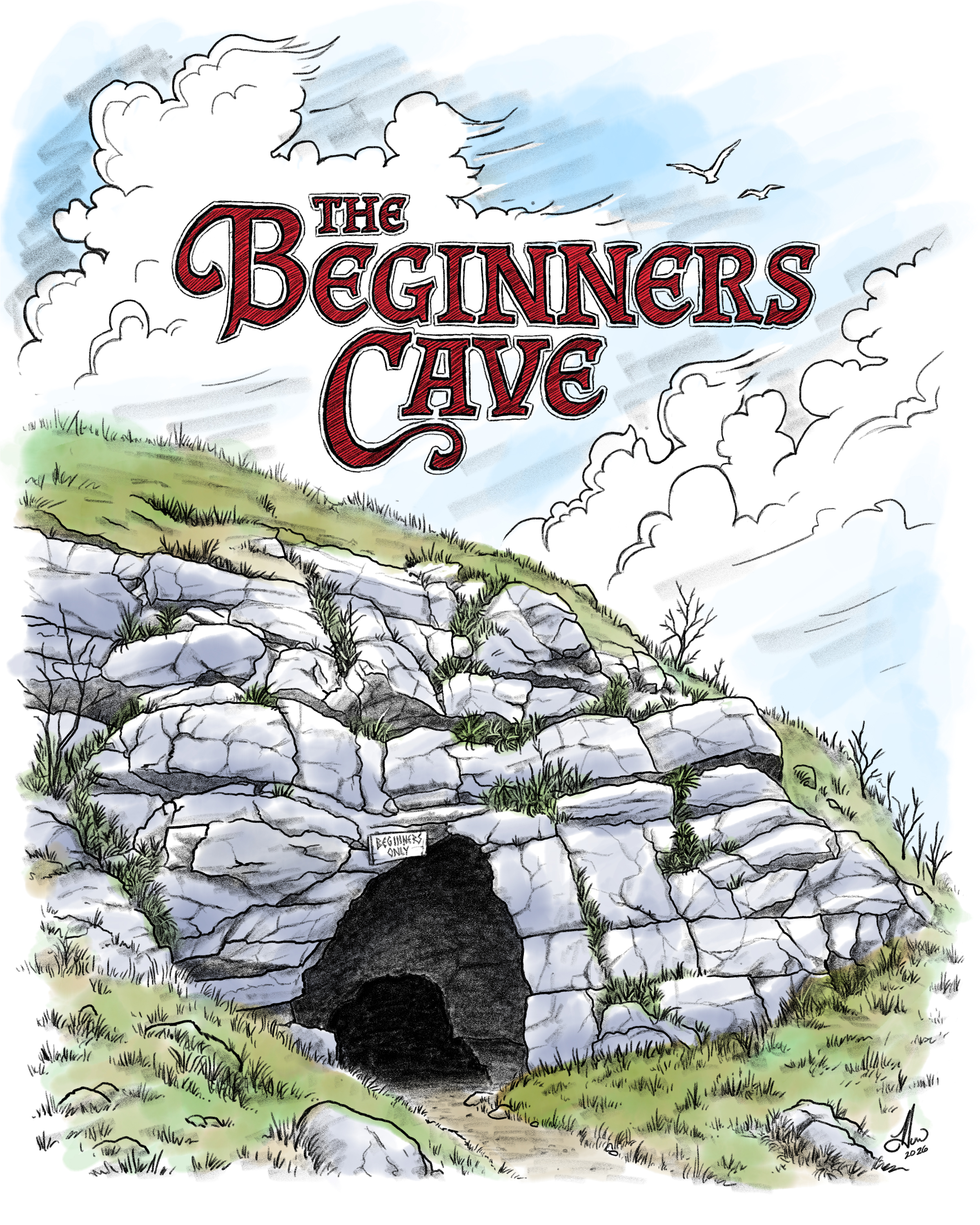
An adventure for Level 1 characters
Adapted by Huw Williams from a classic adventure by Donald Brown
What starts off as a routine training exercise becomes a more dangerous mission when the fledgling party suspects that mysterious figures have entered the guild's training area. Clues point to something dangerously amiss in the cave, and by the time the party grasps the true situation they will have left the expected training course and entered their first real adventure.
Approximate playing time: 4–6 hours across one or two sessions
Number of players: 3–5
Published: October 2026
If you'd like to create your own RPG Eamon adventure, or adapt an existing adventure, please do! Below are some tips for how to write an RPG scenario for Eamon and how to submit it for inclusion on this page.
Whether you're adapting an existing adventure or writing an entirely new one, here are some things to keep in mind:
For adaptations, the big thing to remember is that you aren't obligated to make it exactly like the original. The goal is to make a scenario that works smoothly and naturally for a tabletop RPG party, and that will almost certainly require changes.
Once you've built your RPG adventure, please consider submitting it to the Guide so others can enjoy your creation! Just contact Huw Williams (huwmanbeing@gmail.com) for details.
Please note that adventures published here must not have not been published elsewhere. They must also be your own work and should not be AI-generated. (AI is fine for supporting roles like reference, proofing, etc.)
Submitting artwork isn't required. (However, human-made artwork is always very welcome.) Depending on the adventure, Huw may be able to create some hand-drawn artwork to accompany it!
The dark-themed display can be easier on the eyes.
Displayed as italicized passages, author's notes appear throughout the text of the Guide and give insight into how and where certain features of the world of Eamon originated.